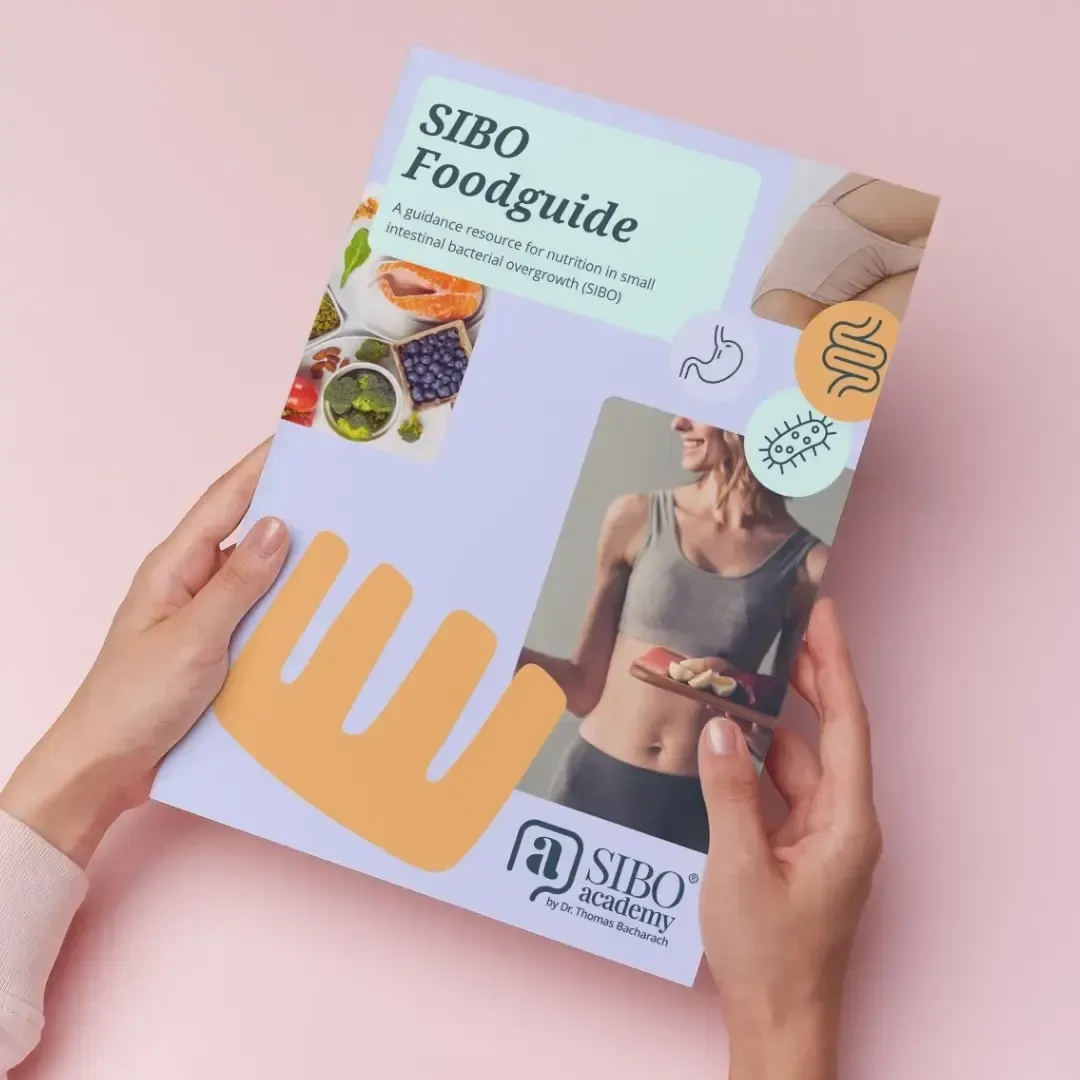
SIBO Foodguide
Find Your Way Back to More Food Variety
The SIBO Foodguide gives you a clear, structured approach to help you navigate your diet—without turning food into a permanent list of restrictions.

Why is the SIBO Food Guide so important for you!
4.91/5 ★ Rating · 300+ qualified therapists
The choice is yours – two versions available
As many people with SIBO also react to foods high in histamine,
the Food Guide is available in two versions:
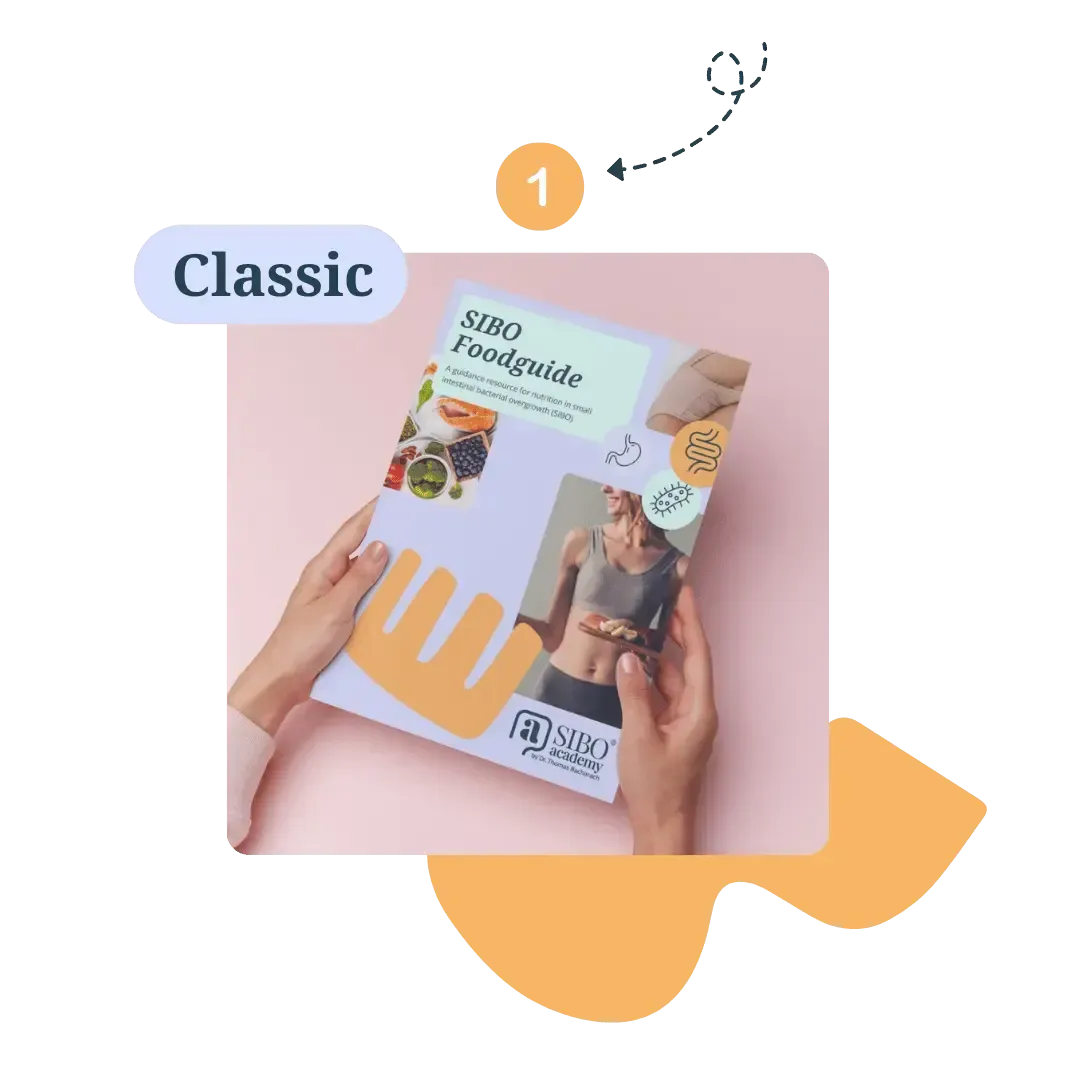
The Classic
SIBO Food Guide
19,90€
To provide general guidance on
choosing food during the three phases.
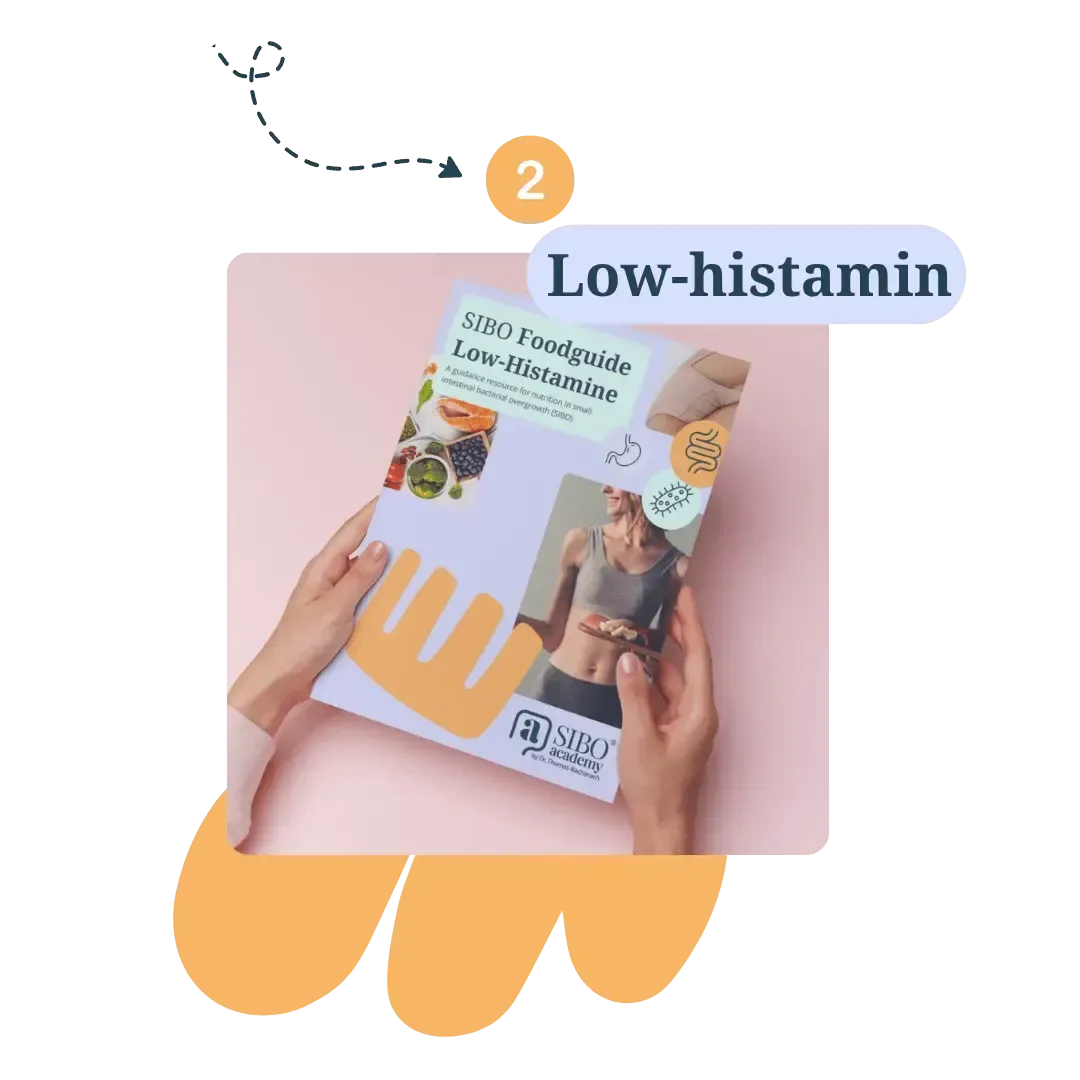
The Low-Histamine SIBO Food Guide
19,90€
For people who, as well as SIBO, wish to take their individual histamine tolerance into account.
The three phases
Phase 1: Reduction
Duration: approximately 4 weeks
In the first phase, foods that are potentially hard to digest, highly fermentable or often difficult to tolerate are temporarily reduced.
The aim is to relieve the digestive tract, soothe symptoms and establish a clearer starting point. By adopting a simpler diet initially, it may become easier to identify links between certain foods and your symptoms.
This phase is not intended as a permanent way of eating. The reduction is a temporary measure designed to provide greater clarity.


Phase 2: Reintegration
Duration: approximately 6 to 8 weeks
Once a more stable baseline has been established, foods are gradually reintroduced.
This involves, amongst other things, specifically testing different FODMAP groups and sources of starch. This allows you to monitor your reactions, document your personal tolerance levels and find out which foods and quantities might work for you.
The focus is not on general lists of ‘good’ and ‘bad’ foods. It’s about getting to know your own body and your individual tolerance levels better.
Phase 3: Stabilisation
Duration: approximately 4 to 6 weeks
In the final phase, the foods that you tolerate well are combined to create a more varied diet that is suitable for everyday life in the long term.
You can test foods again, try out different combinations and observe how your body reacts to so-called mixed food challenges.
The aim is to establish a stable and nutrient-rich foundation that allows you to enjoy greater variety, flexibility and confidence in your eating habits once more.

Get your bundle now
Would you like to gain a comprehensive understanding of SIBO rather than focusing solely on nutrition?
Order the Food Guide together with our SIBO Compass as a bundle and save
6.90€ compared with purchasing the products separately.
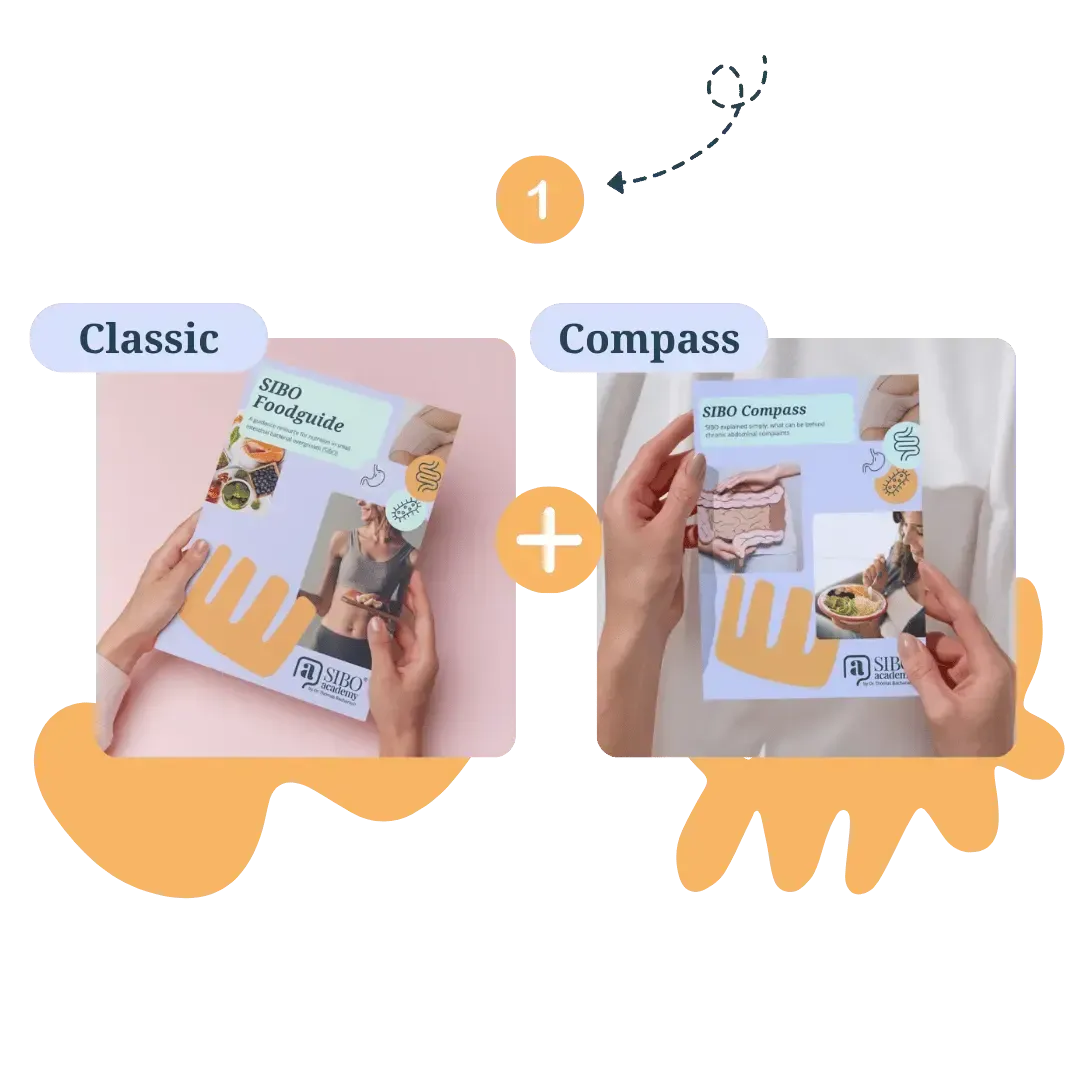
SIBO Foodguide + SIBO Compass
24,90€
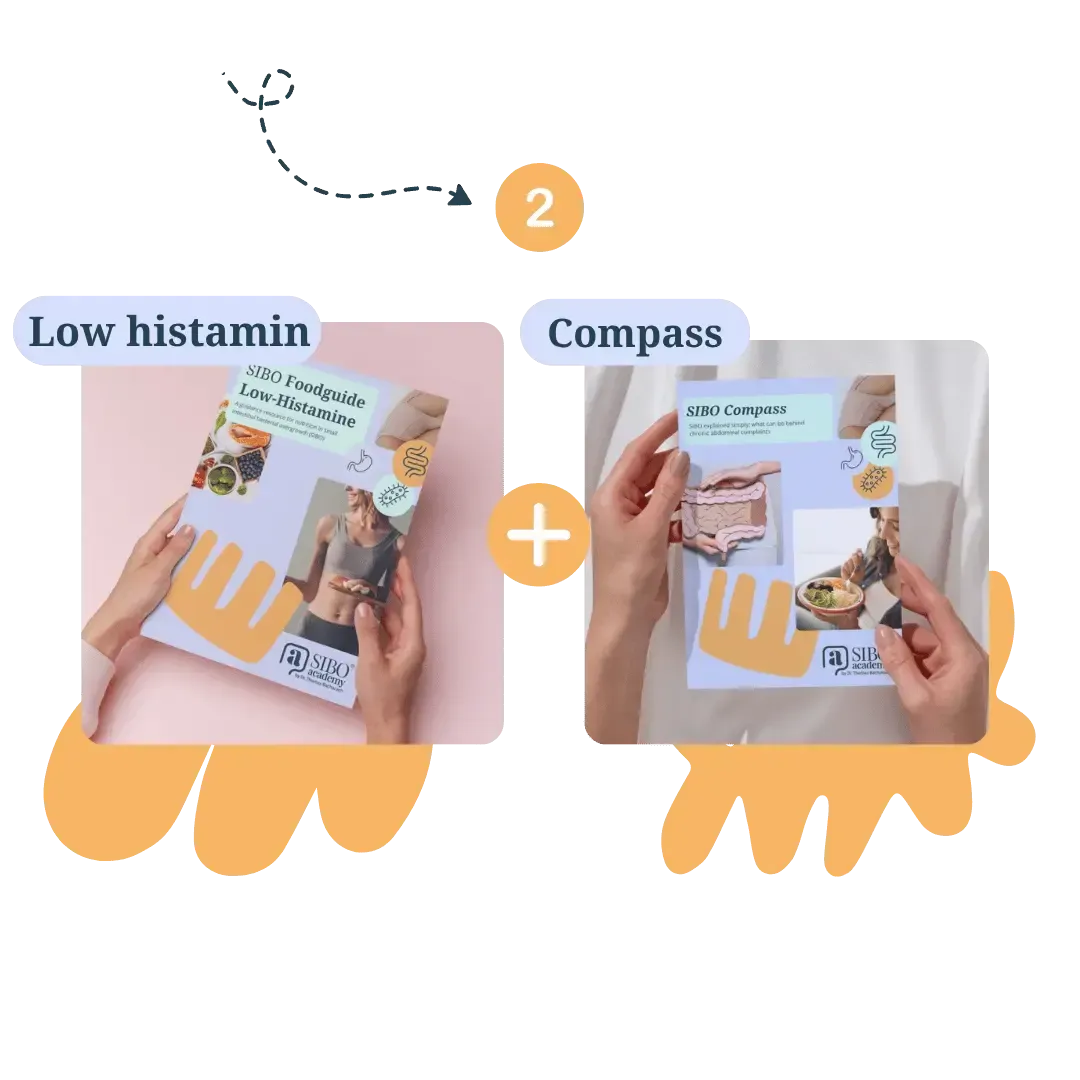
SIBO Foodguide (low-histamine)
+ SIBO Compass
24,90€
From restriction to greater individual freedom
The three phases are not separate diets. They form a shared learning process:
First, calm down; then carry out targeted testing; and finally, build up a varied diet for everyday life.
In the long term, it’s not about eating as strictly as possible. It’s about understanding your body better, regaining confidence in your food choices and bringing as much variety as possible back into your diet.
A severely restricted diet should only be followed for a limited period. Long-term restriction can impair dietary diversity and possibly also the diversity of the gut microbiome.
What people are saying about the SIBO Academy
4.91/5 ★ Course rating · 300+ qualified therapists
Frequently asked questions about
the SIBO Foodguide
Who is the Food Guide suitable for?
The Food Guide is suitable for anyone who would like more guidance when choosing suitable foods in everyday life.
Do I have to completely change my diet?
No. The Food Guide is designed to help you better understand and categorise different foods so that you can make suitable decisions for your daily life, step by step.
Can I use the Food Guide while I am on the go?
Yes. Since the Food Guide is provided digitally, you can save it on your smartphone and use it while shopping or planning your meals.
Are the recommendations equally suitable for everyone?
Food tolerance varies from person to person. The Food Guide provides practical guidance, but the recommendations should always be adapted to your individual situation and tolerance.
How long will I have access to the Food Guide?
After your purchase, you can download the Food Guide and save it permanently on your devices.
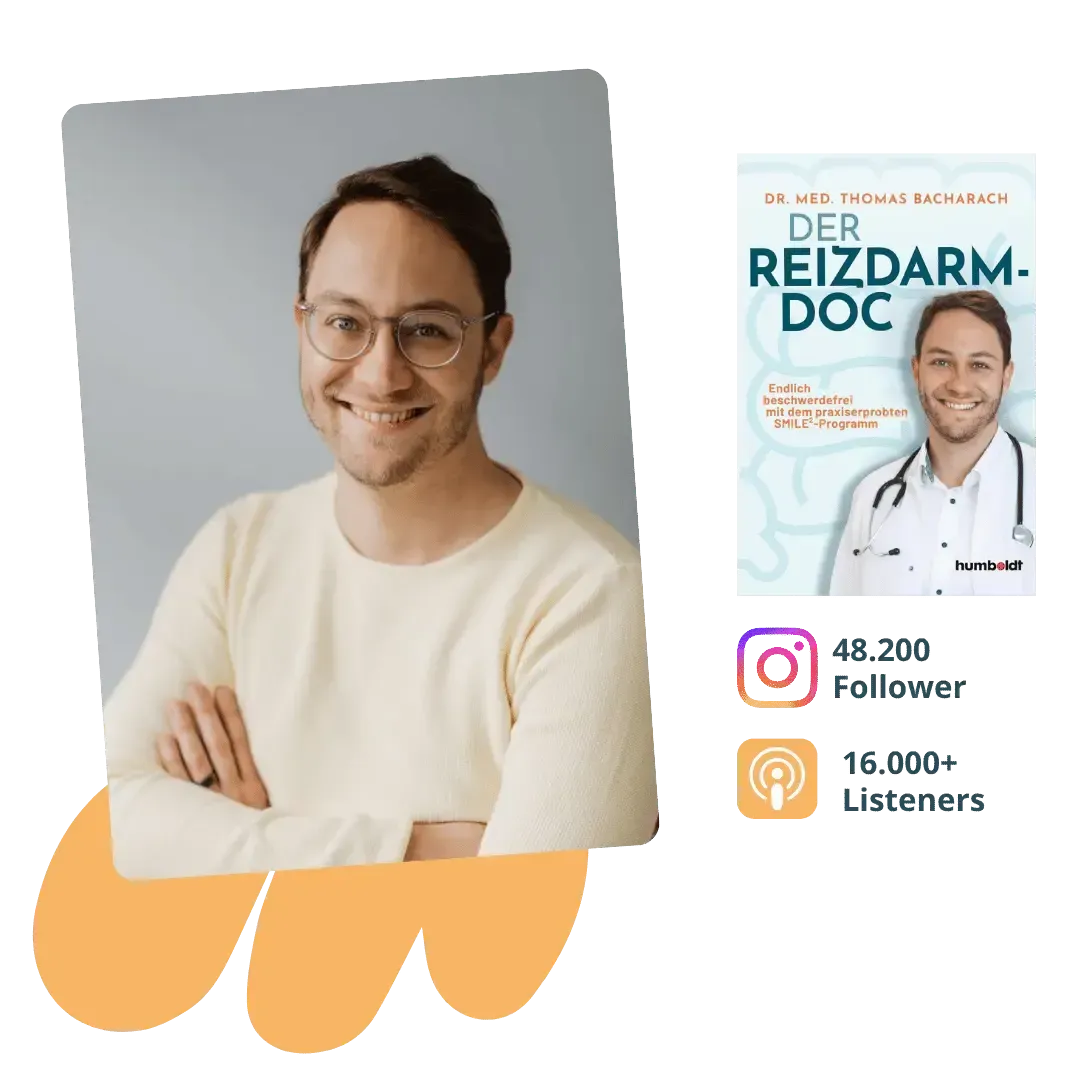
Dr. Thomas Bacharach
Specialist in General Practice
(specialising in the gut/microbiome and irritable bowel syndrome)
Founder of the SIBO Academy
Over 300 qualified therapists
My entire childhood, adolescence and early adulthood were marked by stomach ache and changes in bowel habits. All the tests came back normal – classic irritable bowel syndrome or, as I later discovered, small intestinal bacterial overgrowth (SIBO).
I was intolerant to various foods and had to avoid certain foods for a whole year whilst still at primary school. As a result of this intense experience, I have been furthering my education in the field of gut health for over 10 years. A key factor in being able to help many people was my understanding of small intestinal bacterial overgrowth.
It is therefore my wish to pass on my knowledge to other therapists, in order to help as many people as possible who suffer from gastrointestinal problems.
Medical Notice and Disclaimer
The SIBO Food Guide is intended solely for general information and guidance. It does not constitute a medical diagnosis and is not a substitute for a medical examination, individual diagnosis, medical treatment, psychotherapy or personalised nutritional advice or dietary therapy. The content is not intended to be used to diagnose, treat, cure or prevent any medical conditions on one’s own. Changes to your diet, as well as the omission or reintroduction of foods, should be discussed with a qualified doctor or a suitably trained nutritionist, particularly in cases of existing medical conditions, severe symptoms, underweight, nutrient deficiencies, pregnancy, breastfeeding, in children, or when taking medication.
The timeframes and recommendations provided are general guidelines. Individual progress may vary. Medical advice should be sought in the event of new, persistent or worsening symptoms.
© Copyright 2026 SIBO Academy | All rights reserved